
Outdated Machine, Modern Requirements? How Touchscreen HMI Upgrades Are Solving the 2026 Manufacturing Dilemma
The machine runs fine. The control panel does not.
That’s the reality for thousands of manufacturers in 2026. CNC equipment, injection molders, inspection systems, and packaging lines are still mechanically sound—but their physical button panels and monochrome displays are becoming a bottleneck for productivity, training, and data integration.
The question is not whether to modernize. The question is how to do it without scrapping millions of dollars of functional equipment.
The Real Cost of Keeping Old Interfaces
Consider a typical mid-sized factory: a 12-year-old CNC lathe, reliable as ever, but its interface requires 47 button presses to change a tool offset. New operators need two weeks of training just to navigate the menu. Senior technicians who know the system by heart are retiring.
The result? Longer changeover times, higher training costs, and an interface that cannot feed real-time data into the production monitoring system.
Replacing the entire machine is one option—but it’s expensive, disruptive, and often unnecessary. The core logic and mechanics are still perfectly capable.
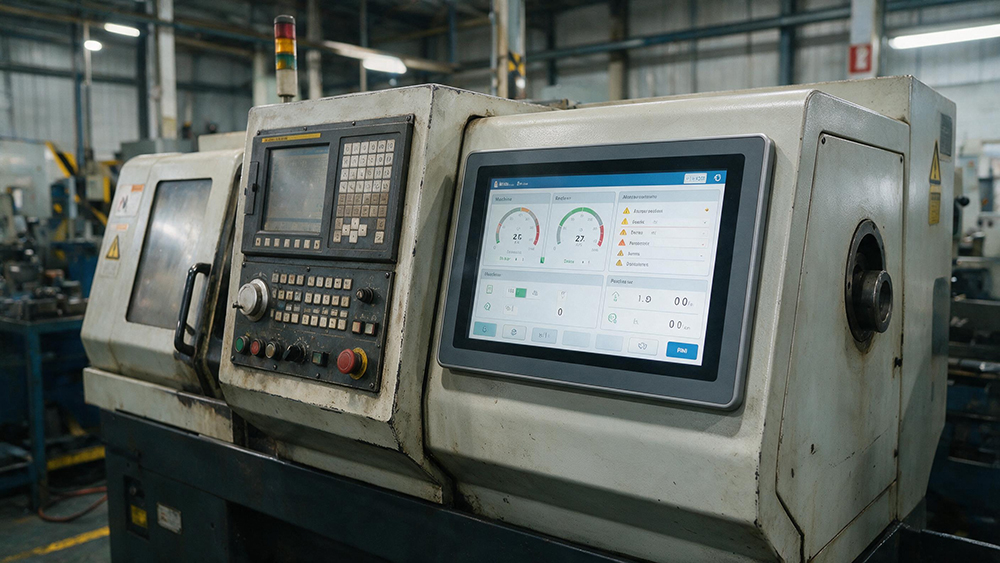
A Smarter Path: Touchscreen HMI Overlay
Instead of rebuilding the machine, many manufacturers are upgrading the interface—adding a modern touchscreen HMI that sits on top of the existing control architecture.
This approach works because most legacy controllers still communicate through standard serial or Ethernet protocols. An industrial touch display can interpret and present those signals through a graphical interface: machine status, alarms, production counters, parameter adjustments, all accessible with a tap or swipe.
Operators can be trained in hours instead of days. Machine data becomes visible at a glance. And the underlying equipment stays intact.
When the Display Is Fine, But Touch Isn't
In some cases, the existing LCD or monitor is still perfectly usable—it just lacks touch functionality. Here, infrared touch frames offer a practical alternative: a slim bezel that mounts around the existing screen, adding multi-touch capability without replacing the display itself.
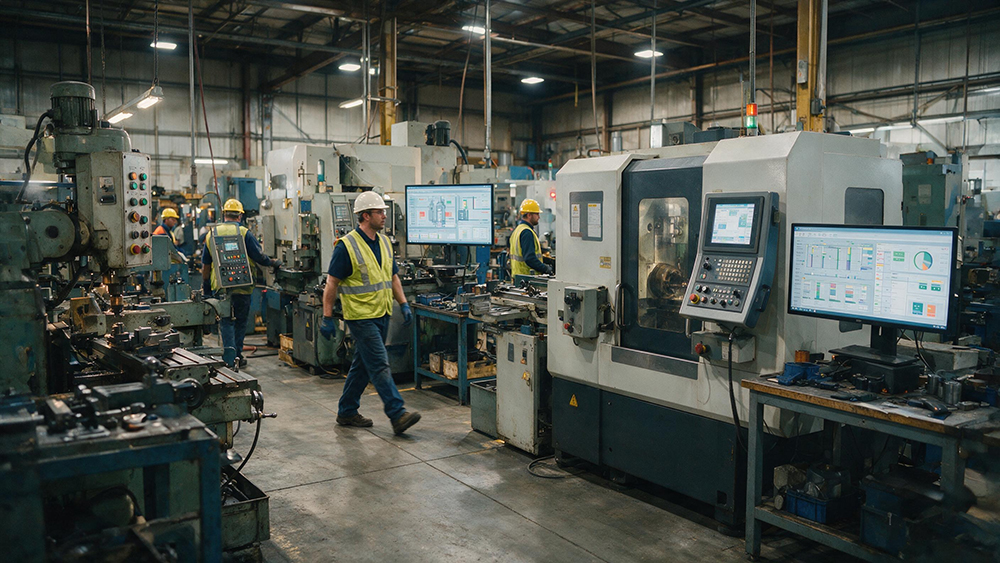
This is particularly relevant for large-format industrial monitors, production dashboards, or older HMI panels where the screen remains adequate but interactive control is now required. It’s a lower-cost, lower-disruption entry point into touch-enabled operation.
Why 2026 Makes This More Urgent
Three trends are accelerating this shift:
First, the industrial workforce is changing. Younger operators expect touch-based, smartphone-like interactions. They don’t want to memorize cryptic button sequences.
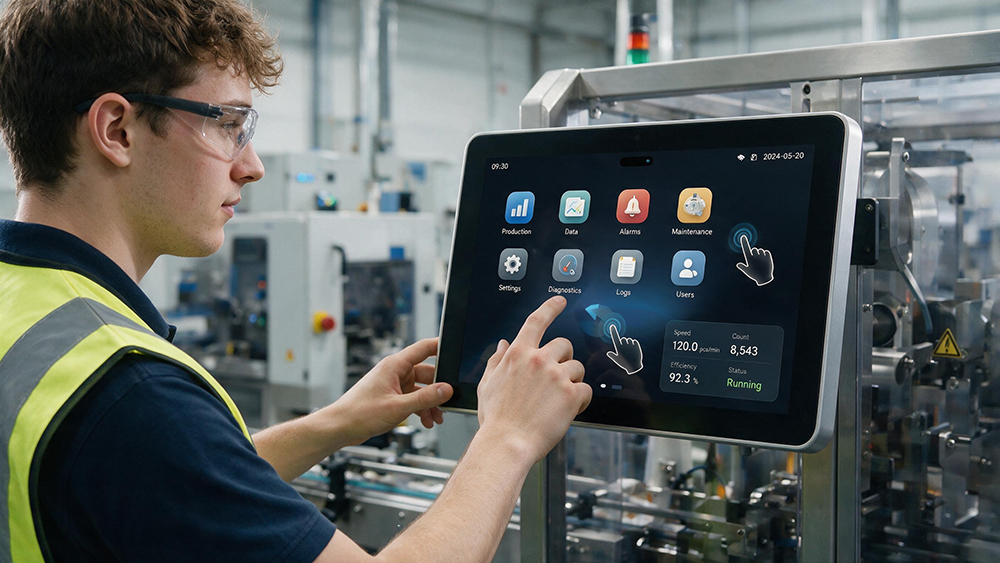
Second, production data needs to move. Legacy panels are islands of information. A touchscreen HMI can serve as a gateway to edge computing, OEE dashboards, and predictive maintenance systems.
Third, AI-assisted operation is coming. But AI needs an interface to deliver insights to the operator. A touchscreen is that bridge—showing recommendations, warnings, and suggested adjustments in real time.
Start Small, Scale Fast
The most practical digital transformation strategy today is not a “rip and replace” approach. It’s identifying the pain points—training bottlenecks, setup complexity, data blind spots—and addressing them with targeted HMI upgrades.
Industrial touch displays and infrared touch frames are not just components. They are the quickest path to making legacy equipment feel modern, without making it obsolete.
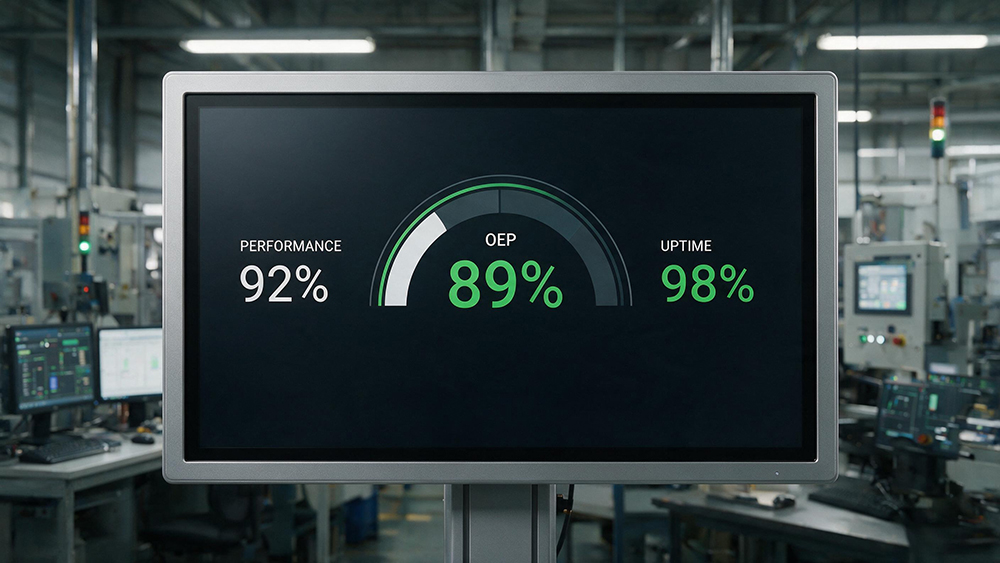
The factory of the future won't be built from scratch. It will be upgraded from the factory of today. And that upgrade starts at the interface—where people meet machines.


